Stainless Steel Plates Overview
Sensitisation and Weld Decay
When the temperature range is between 450 to 850 degrees Celsius, there is precipitation of chromium carbide because of the formation of chromium carbide by reaction of carbon with chromium in the austenitic stainless steel. The chromium used will be from the metal in the region adjacent to the grain boundary.
The steel is now sensitised. It looks identical. It tests identically for tensile strength. But corrosion attacks along those depleted grain boundaries, and the attack is intergranular, meaning it undermines grains rather than dissolving them, so material can lose structural integrity while losing very little weight.
Welding takes the heat affected zone straight through that temperature range on the way up and again on the way down, which is why the damage appears in bands parallel to the weld rather than at it.
Three defences, and it is worth understanding which one you are relying on:
|
Approach
|
How it works
|
Trade-off
|
|
Low carbon grades
|
Less carbon available to form carbides
|
Slightly lower strength at temperature
|
|
Stabilised grades
|
Titanium or niobium ties up carbon preferentially
|
Higher cost, slight machinability penalty
|
|
Post-weld solution annealing
|
Redissolves the carbides
|
Impractical on large fabrications
|
For most welded fabrication, a low carbon grade is the straightforward answer, and specifying the standard carbon grade for a welded vessel to save a small premium is a false economy that shows up years later.
Distortion and Thermal Behavior
Distortion is usually underestimated when there is a change in material from carbon steel to stainless plate.
|
Property
|
Austenitic stainless
|
Carbon steel
|
|
Thermal conductivity at 20°C
|
15 – 17 W/m·K
|
50 – 54 W/m·K
|
|
Thermal expansion, 20 to 100°C
|
16 – 17.5 µm/m·K
|
11.5 – 12 µm/m·K
|
|
Density
|
7.9 – 8.0 g/cm³
|
7.85 g/cm³
|
|
Elastic modulus
|
193 – 200 GPa
|
200 – 210 GPa
|
|
Specific heat
|
500 J/kg·K
|
470 – 490 J/kg·K
|
Heat conducts away roughly three times more slowly, so it concentrates near the weld. The material then expands about fifty percent more for the same temperature rise. The combination produces substantially greater distortion and higher residual stress than identical practice on carbon steel would give.
Practical responses: lower heat input, more and closer tack welds, balanced welding sequence, backing bars to draw heat away, and accepting that a fabrication schedule developed on carbon steel will not transfer directly.
Grade Selection by Service Environment
|
Service
|
Typical requirement
|
Family direction
|
|
Food, dairy, brewing
|
Cleanability, mild chlorides from sanitisers
|
Standard or low carbon austenitic
|
|
Chemical process
|
Acid resistance varying by medium
|
Molybdenum-bearing austenitic upward
|
|
Marine and coastal
|
Chloride pitting and crevice attack
|
Duplex or high alloy austenitic
|
|
High temperature
|
Scaling resistance, structural stability
|
Heat-resisting austenitic grades
|
|
Water treatment
|
Mild corrosion, cost sensitivity
|
Standard austenitic or ferritic
|
Grades are best chosen against the environment rather than by reputation. The most common overspecification we see is a high alloy grade selected for a mild environment, and the most common underspecification is a standard austenitic grade in chlorides.
Size Range and Tolerance
|
Parameter
|
Range
|
|
Thickness
|
3 – 100 mm
|
|
Width
|
1000 – 2500 mm
|
|
Length
|
2000 – 6300 mm
|
|
Thickness tolerance
|
To ASTM A480
|
|
Supply condition
|
Hot rolled, solution annealed and pickled
|
|
Surface
|
No. 1 pickled, or ground and polished to requirement
|
Cut-to-size plate, profile cut components, edge preparation and polished finishes are supplied against specific requirements.
Cutting Stainless Plate
The cutting method affects the edge more than it does on carbon steel, because the cut edge is where corrosion will start if it is left in the wrong condition.
- Plasma cutting. The common route is medium thickness. Leaves a heat affected zone and an oxidised edge that should be dressed back before service
- Laser cutting. Cleaner edge, tighter tolerance, restricted to thinner plate
- Waterjet cutting. No heat affected zone at all, which makes it the preferred route where the cut edge is functional or the material must not be metallurgically altered
- Mechanical sawing and shearing. No heat input, though shearing work hardens the edge and can leave a burr that must be removed
- Oxy-fuel cutting. Does not work on stainless in the conventional way, since the oxide formed is refractory rather than fluid
Whatever the method, dedicated equipment matters. A plasma table or grinding wheel previously used on carbon steel transfers iron onto the stainless surface.
Applications
- Pressure vessels and tanks. Shells, dished ends, nozzles for chemical and food service
- Food and dairy plant. Process tanks, hoppers, chutes, cleanable surfaces
- Chemical and pharmaceutical. Reactors, storage vessels, structural components in corrosive atmospheres
- Water and effluent treatment. Screens, launders, tank linings, submerged structures
- Marine and offshore. Deck plating, bulkheads, splash zone components
- Architecture. Cladding, feature panels, structural facings
Stainless Steel Plates Stockists in India
Fabricators work with capable stainless steel plates stockists in India because stainless plate procurement is doubly timing sensitive. Mills roll to programmes as they do for carbon steel, but the range of grades and thicknesses is wider and each combination moves in smaller volume, so the wait for a specific item is longer.
Our holding covers commonly used thicknesses in the fast-moving austenitic grades, stored horizontally on level supports and isolated from carbon steel.
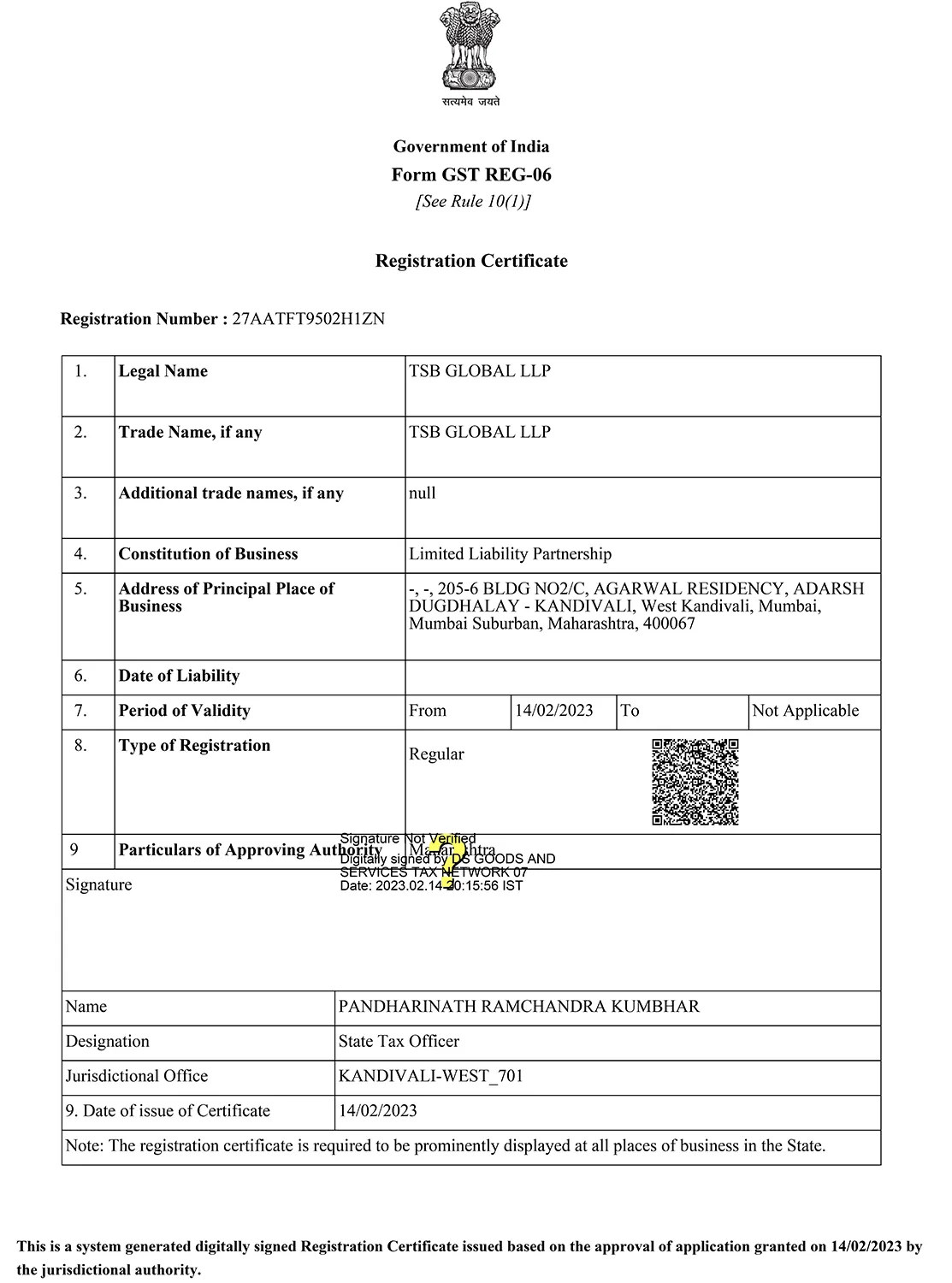
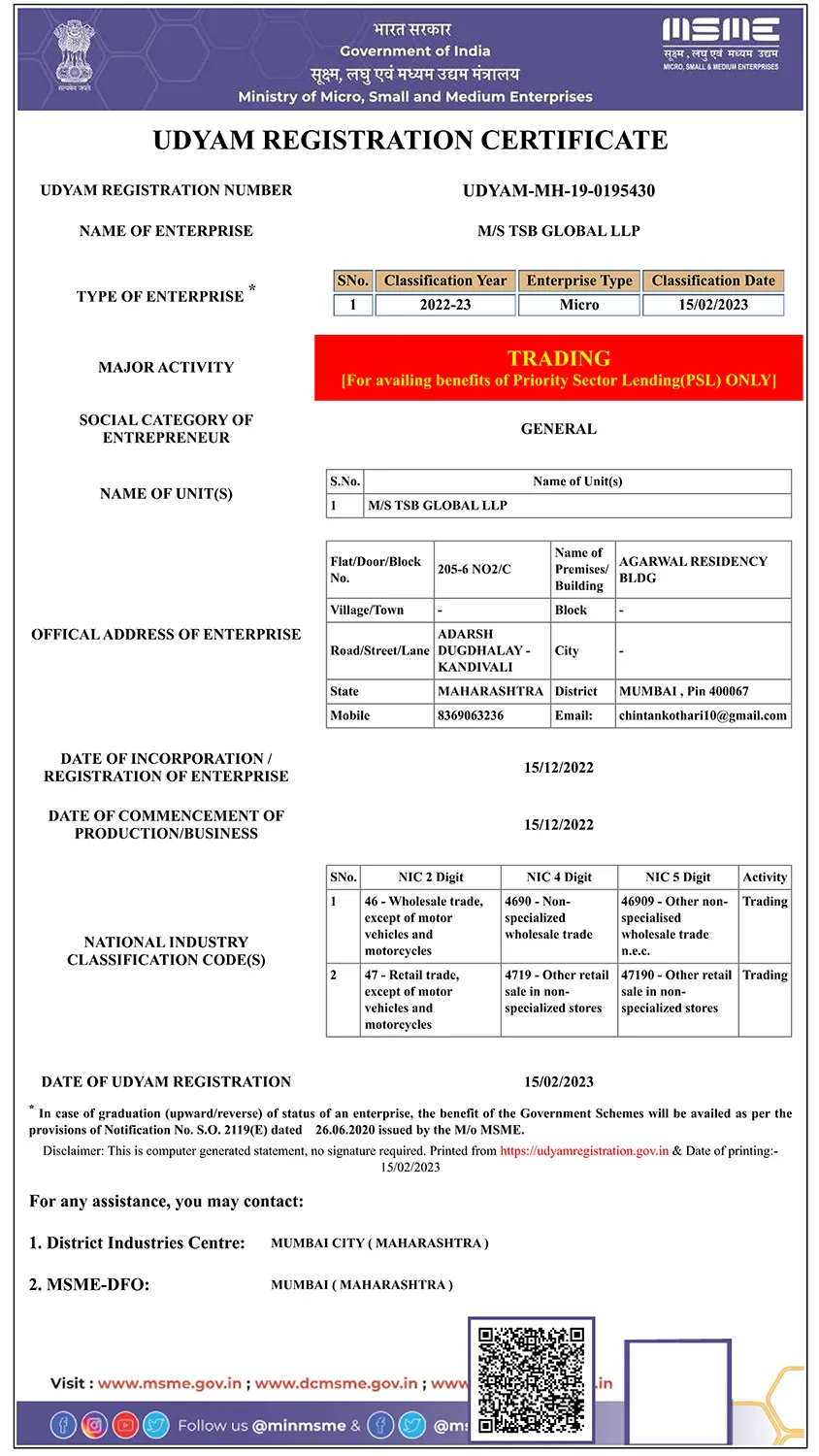
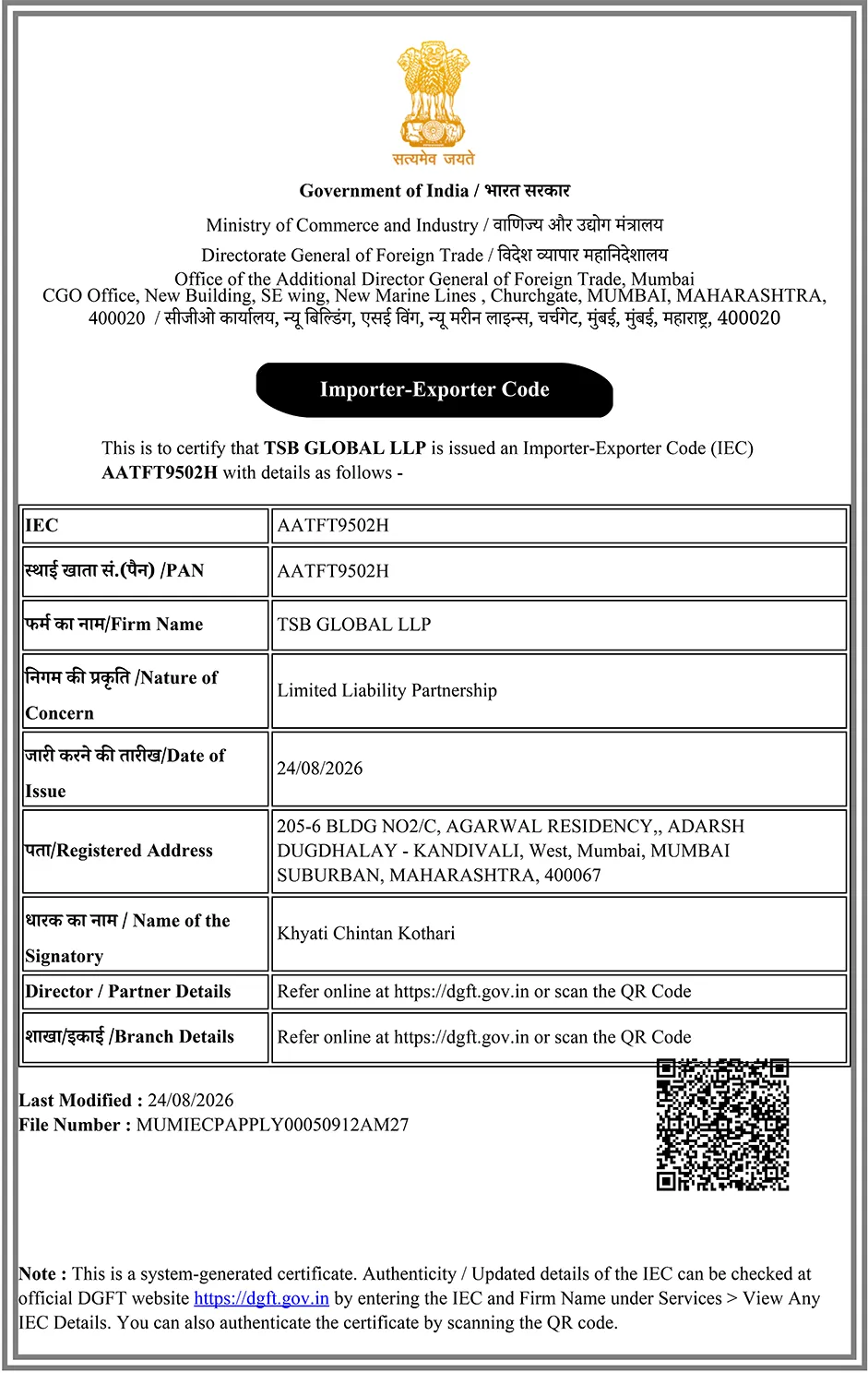
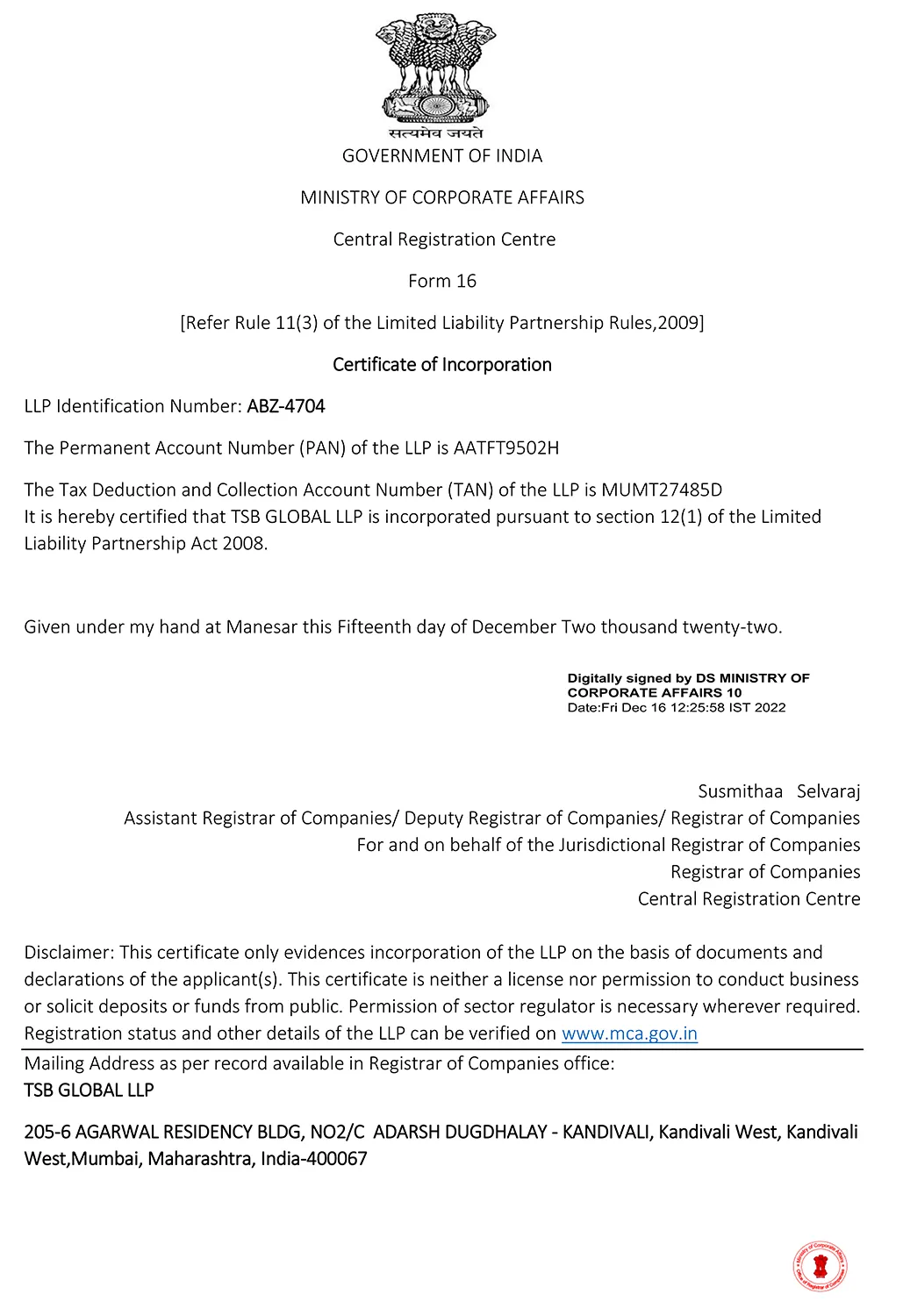
TSB Global LLP is a stockist and supplier rather than a rolling mill, and in stainless plate that means our contribution is availability, segregation and verified identity.
- Common thicknesses held in fast-moving grades against project schedules
- Supply from single plates through to full project tonnage
- Cut to size and profile cutting with dedicated stainless equipment
- Edge preparation arranged before dispatch
- Positive material identification available on release
- Storage isolated from carbon steel, with plates flat on level supports
Testing and Certification
Standard release covers chemical analysis, tensile and yield strength, elongation, hardness and intergranular corrosion testing where the application requires it.
- Intergranular corrosion testing to ASTM A262, the direct check for sensitisation
- Pitting corrosion testing to ASTM G48 for chloride service
- Ultrasonic examination for laminations where through-thickness loading applies
- Positive material identification by portable analyser
- Ferrite content measurement on duplex plate
- Third-party inspection through TUV, SGS, BV or a nominated agency
Certification is EN 10204 3.1, with 3.2 supplied where pressure equipment codes require independent endorsement.
Stainless Steel Plates Exporters in India
As stainless steel plates exporters in India, we ship to fabrication yards, tank builders and process equipment manufacturers across the Middle East, Southeast Asia, Africa, Europe and the Americas.
Surface protection governs stainless plate export, and the concern is contamination and mechanical damage rather than corrosion. Polished and ground plate travels with protective film applied, since a scratch on a finished surface is a rejection rather than a blemish on architectural and hygienic work.
Plates are stacked flat with timber bearers supporting the full width, and lifting points identified so handling does not bend thin sections. Steel strapping is replaced with polyester banding or protected with packing beneath, because iron deposits from bands rust and stain the plate surface.
Plate Weight and Ordering
Stainless plate is sold by weight, and the density difference from carbon steel is large enough to matter on tonnage.
Austenitic grades run around 7.9 to 8.0 g/cm³ against 7.85 for carbon steel. Weight is length in metres multiplied by width in metres multiplied by thickness in millimetres multiplied by 7.95.
|
Plate size
|
Thickness
|
Approximate weight
|
|
2000 x 1000 mm
|
3 mm
|
47.7 kg
|
|
2500 x 1250 mm
|
6 mm
|
149 kg
|
|
3000 x 1500 mm
|
10 mm
|
358 kg
|
|
6000 x 1500 mm
|
20 mm
|
1431 kg
|
|
6000 x 2000 mm
|
40 mm
|
3816 kg
|
Two points at quotation stage. Alloy surcharge is quoted separately from base price by most mills and moves with nickel and molybdenum prices, so a price held for a long period is unusual in this market. And theoretical weight assumes exact nominal thickness, while actual thickness varies within tolerance, so confirm whether a quotation is on theoretical or actual weight before comparing offers.
Why Should You Consider TSB Global LLP for Your Stainless Steel Plates?
TSB Global LLP has a reputation for its wide variety of stainless steel plates that find application in various sectors such as industrial applications, fabrication, construction, chemicals, food industry, and heavy engineering. We offer robust stainless steel plates in exact sizes coupled with high quality and fast delivery.
Why Should We Be Your Preferred Choice?
- Stainless steel plates of different grades and sizes are available.
- Hot rolled stainless steel plates of different types are available.
- Facilities for size cutting and profiling cutting are also available.
- Quality tested products can be supplied with mill test certificates.
- We can supply stock material at the right time for your projects.
- Can be used for pressure vessel projects, tank projects, chemical projects, marine projects, and architectural projects.
- Bulk supplies are possible with packing of stainless steel plates.
Buy Stainless Steel Plates for Your Industrial Application
Looking for stainless steel plate suppliers in India? Our organization TSB Global LLP can offer you high-quality stainless steel plates of different specifications. We have a wide range of stainless steel plates of different types and specifications.
About This Page
Property values are typical for austenitic grades and vary between families and individual grades. Sensitisation temperature ranges are approximate and depend on composition and time at temperature. Welding procedures must be qualified to the applicable code. Material selection for pressure-retaining or corrosive service should be made by a qualified engineer against the governing code and the specific environment.