Stainless Steel Coil Overview
Surface Finish Designations
Finish is produced by the rolling and processing route, and each designation carries a characteristic appearance and roughness.
|
Finish
|
How produced
|
Appearance
|
Typical Ra
|
|
No. 1
|
Hot rolled, annealed, pickled
|
Dull, rough, matt
|
3 – 7 µm
|
|
2D
|
Cold rolled, annealed, pickled
|
Uniform dull matt
|
0.4 – 1.0 µm
|
|
2B
|
2D plus a light skin pass
|
Smooth, slightly reflective
|
0.1 – 0.5 µm
|
|
BA
|
Bright annealed in controlled atmosphere
|
Highly reflective, mirror-like
|
0.05 – 0.1 µm
|
|
No. 4
|
Mechanically abraded, directional grain
|
Brushed satin
|
0.2 – 1.0 µm
|
|
No. 8
|
Progressively polished
|
Mirror
|
Under 0.05 µm
|
2B is the workhorse and covers the majority of general fabrication. BA is specified where reflectivity matters and where the surface will not be worked afterwards. No. 4 is the familiar brushed finish on kitchen and architectural work, and it is directional, which means panels must be laid out with the grain running consistently or the assembly looks wrong under raking light.
Two points worth knowing. Finish affects corrosion resistance, because a smoother surface holds fewer sites where deposits can settle and initiate crevice attack. And a finish cannot be improved after forming without reworking the whole surface, so it must be specified correctly at the coil stage.
Formability and Work Hardening
Austenitic stainless forms well but behaves differently from carbon steel, and press shops moving between the two need to adjust.
The material work hardens rapidly during deformation. This is genuinely useful in deep drawing, because the drawn wall strengthens as it forms and resists further thinning, which allows deeper draws than the initial strength would suggest.This implies that the forces will be high, faster wear of tooling, and much spring back.
|
Characteristic
|
Austenitic stainless
|
Carbon steel drawing quality
|
|
Work hardening rate
|
High
|
Low to moderate
|
|
Elongation
|
45 – 55%
|
32 – 44%
|
|
Press force required
|
Substantially higher
|
Baseline
|
|
Springback
|
Pronounced
|
Moderate
|
|
Galling risk on tooling
|
High
|
Low
|
Galling deserves particular attention. Stainless tends to cold weld to tooling under pressure, which scores both the part and the die. Effective lubrication is not optional, and many press shops use tool coatings or dissimilar tool materials specifically to break the adhesive tendency.
Ferritic grades behave differently again: lower work hardening, less springback, cheaper, but with reduced formability and corrosion resistance. For lightly formed components in mild environments they are frequently the sensible economic choice, and they are routinely overlooked.
Hot Rolled and Cold Rolled
Hot rolled coil covers the thicker gauges, supplied annealed and pickled with a No. 1 finish. Tolerance is wider and the surface is rough, which suits structural components, tube manufacture and anything that will be further processed.
Cold rolled coil is reduced at room temperature, then annealed and finished. It gives close thickness tolerance, consistent mechanical properties and the range of surface finishes described above. Appliance panels, kitchen equipment, architectural cladding and visible components all come from it.
Specifying cold rolled where hot rolled would serve is a common and expensive error, and the gap in stainless is wider than in carbon steel because the finishing operations cost more.
Size Range and Tolerance
|
Parameter
|
Hot rolled
|
Cold rolled
|
|
Thickness
|
2.0 – 8 mm
|
0.3 – 3 mm
|
|
Width
|
1000 – 1550 mm
|
600 – 1550 mm
|
|
Coil weight
|
3 – 15 t
|
2 – 12 t
|
|
Internal diameter
|
508 mm or 610 mm
|
508 mm or 610 mm
|
|
Thickness tolerance
|
To ASTM A480
|
To ASTM A480, closer than HR
|
|
Finish
|
No. 1
|
2D, 2B, BA, No. 4 to order
|
Slitting to narrower width, cut-to-length sheet and PVC film application are supplied against requirement.
Applications
- Kitchen appliances. Work surfaces, sinks, splashbacks, cabinet panels, serving counters
- Appliance manufacture. Drums, panels, internal structure, pressed components
- Automotive. Exhaust components, trim, formed brackets, clamps
- Tube and pipe manufacture. Sanitary tube, structural tube, decorative tube
- Architectural cladding. Facade panels, column casings, lift interiors, signage
- Process equipment. Tank shells, hoppers, guarding, hygienic enclosures
Stainless Steel Coil Stockists in India
The service required from established stainless steel coil stockists in India centres on width and finish rather than on gauge. Mills roll standard widths in standard finishes, and a fabricator needs coil slit to suit the blank layout, in the finish the end customer specified.
Slitting is therefore central to what we do, alongside holding the common finishes so a customer is not forced to accept 2B when the job called for No. 4.
Storage is segregated from carbon steel throughout. Iron contamination on a stainless surface rusts, and on a visible finish that is a rejection rather than a blemish.
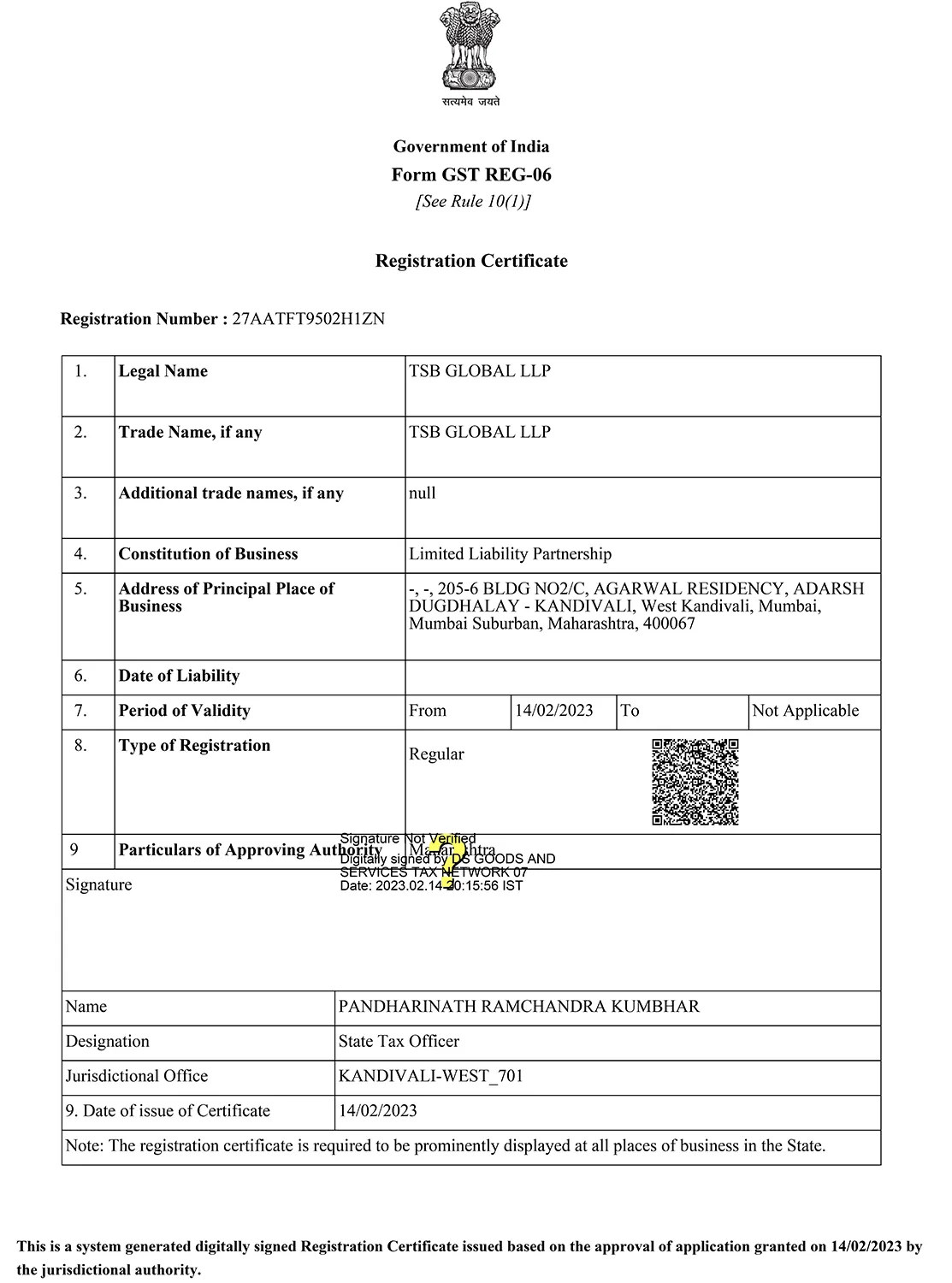
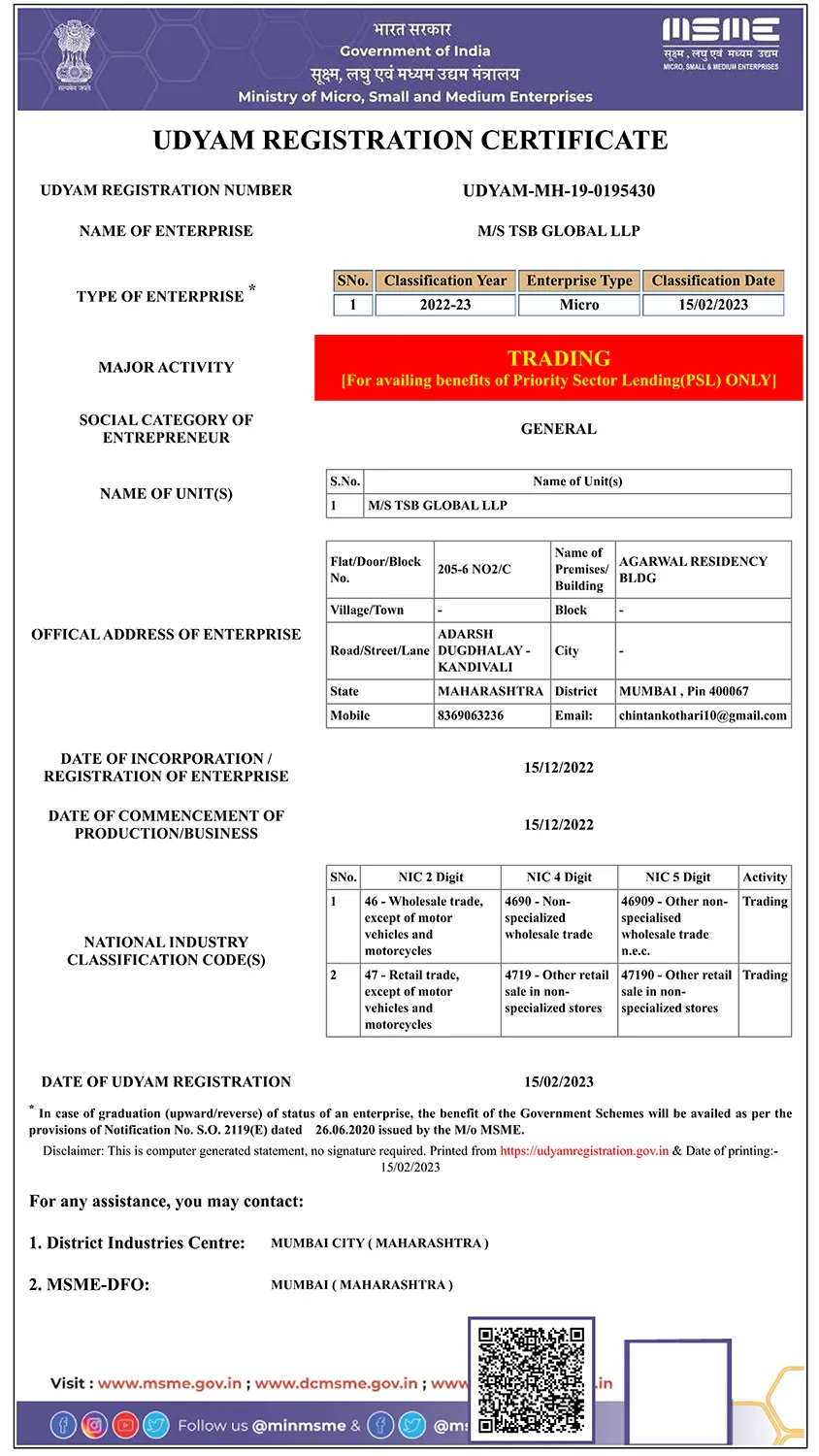
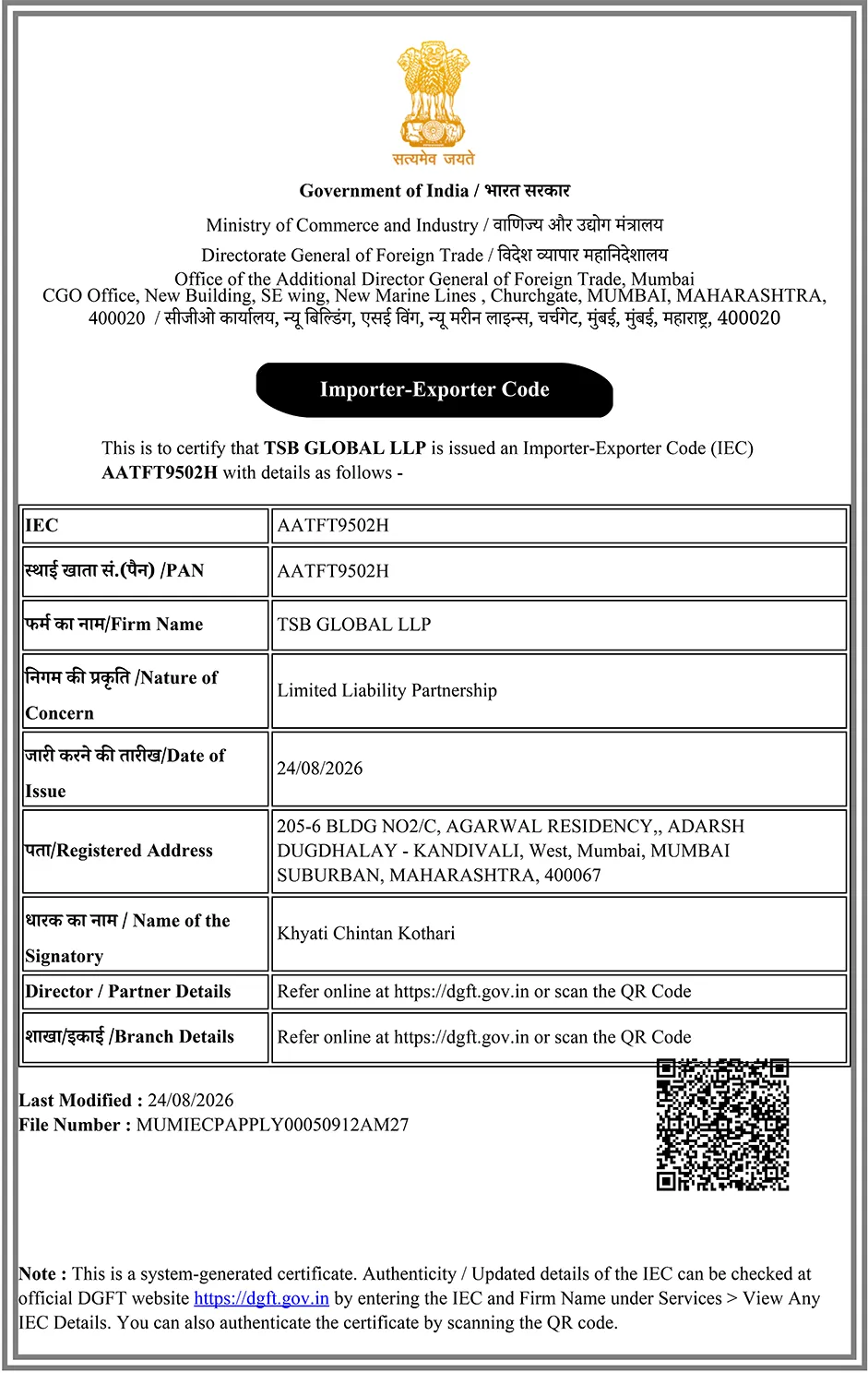
TSB Global LLP is a stockist and supplier, not a rolling mill, and coordinates slitting and cut-to-length through qualified processors.
- Slitting to customer width, improving blank utilisation and reducing scrap
- Common finishes held, so the specification does not have to bend to availability
- Part-coil quantities released, removing the mill tonnage minimum
- PVC protective film applied where the finish is visible in the finished product
- Coil weights matched to decoiler and crane capacity
- Storage isolated from carbon steel, with dedicated handling equipment
Protecting the Finish
On visible-finish coil, surface protection is not packaging. It is part of the product.
- PVC film applied at the mill or before dispatch, staying on through fabrication and removed at final installation
- Directional finishes need grain orientation marked, since a panel installed with the grain running the wrong way is visibly wrong
- Interleaving paper between wraps where film is not used
- Dedicated handling equipment, since rollers and clamps used on carbon steel embed iron
- Film removal timing matters. Left too long in sunlight, adhesive can bond to the surface and become difficult to remove cleanly
Testing and Certification
Coil is released against chemical analysis, tensile and yield strength, elongation and hardness.
- Intergranular corrosion testing to ASTM A262 where specified
- Cupping test to IS 10175 or Erichsen test, giving a direct measure of drawability
- Surface finish verification including Ra measurement where specified
- Positive material identification by portable analyser
- Grain Size in accordance with ASTM E112
- Independent inspection by TUV, SGS, BV, or nominated authority
Certificate issued in line with EN 10204 3.1, 3.2 where needed
Stainless Steel Coil Exporters in India
As stainless steel coil exporters in India, we cater to fabricators, appliance makers, and tube makers in the Gulf, Southeast Asia, Africa, Europe, and America.
Coil export carries the usual mechanical risks, telescoping and edge damage, plus one specific to stainless: the finish must arrive as it left. Bindings are applied with tension that holds the wrap without indenting the outer laps, edge protectors are fitted, and coils are packed with the wrapped surface protected against abrasion from the packaging itself.
Polyester banding replaces steel strapping, or protective packing is placed beneath any steel band. Coil tags carry grade, finish designation, thickness, width, weight and heat number, with finish stated prominently because 2B and BA coil are not visually obvious to a receiving storeman.
Receiving and Inspecting Stainless Coil
Stainless coil problems are cheapest to catch at goods inward, and the checks differ from carbon steel because finish and contamination matter as much as dimension.
- Confirm grade and finish against the packing list before the coil goes anywhere. 2B and BA are not obvious to the eye at a glance, and a finish error discovered mid-production is expensive
- Check for iron contamination. Marks of rust on a new coil suggest that the coil has been touched with carbon steel while being transported or handled. Though it is not a case of corrosion, it still requires cleaning before the use of the material on any exposed parts.
- Inspect the outer wraps for scoring or indentation. Binding tension marks and abrasion from packaging show immediately and are grounds for a claim
- Verify PVC film condition where the coil is filmed. Lifted or damaged film means the surface beneath is exposed
- Confirm internal diameter suits your mandrel before lifting onto the payoff
- Run positive material identification if the grade is critical. It takes seconds and settles any doubt
Recording these checks builds the traceability record that food, pharmaceutical and pressure equipment customers will eventually ask to see.
Why Choose TSB Global LLP for Stainless Steel Coils?
TSB Global LLP provides premium quality stainless steel coils to their customers that are useful in both the industrial and commercial environments. TSB Global LLP provides a wide range of stainless steel coils in various grades, dimensions, and thicknesses.
Why Choose Us?
- We have premium-quality stainless steel coils in different grades and gauges.
- We offer precision cutting as well as slit-to-length service according to project specifications.
- Our surface finishes in high quality include types such as 2B, BA, No. 4, and No. 8.
- We have high inventories to deliver on time without any problems.
- Our products are always quality-tested prior to dispatch.
- Suitable for kitchenware, automobiles, architectural use, appliances, and industrial use.
- We can supply bulk orders packed properly to protect coil surfaces.
Get Superior Stainless Steel Coils for Your Business
Are you looking for dependable stainless steel coil suppliers in India? This is TSB Global LLP, happy to provide you with high-quality stainless steel coils of various kinds, grades, forms, sizes, and finishes. You can always reach out to us.
About This Page
Finish designations and Ra ranges given here are typical and vary between producers and standards. Formability comparisons are general and depend on grade, thickness, tooling and lubrication, and should be confirmed by trial on delivered coil. Surface finish requirements should be agreed in writing with the end customer before the coil is ordered.