MS Steel Hex Bars Overview
Why MS Hex Bar Quality Matters More Than Material Price
A component turned from a hex bar carries costs in a fairly predictable proportion, and it is worth seeing them laid out.
|
Cost element
|
Typical share of part cost
|
|
Material
|
15 – 25%
|
|
Machine time
|
35 – 50%
|
|
Tooling and consumables
|
8 – 15%
|
|
Secondary operations
|
10 – 25%
|
|
Inspection and handling
|
5 – 10%
|
Machine time dominates, which means anything affecting cycle time or unattended running matters more than the material rate. Four bar characteristics feed straight into it:
- Chip-breaking behaviour, which decides whether the machine runs unattended or needs an operator clearing swarf
- Hardness consistency between heats, since variation causes dimensional drift as tools wear at different rates
- Straightness, because a bowed bar in a guide bush produces vibration, poor finish and short tool life
- Consistent bar length, since mixed lengths disrupt magazine loading and leave excess remnants
A delivery that is metallurgically correct but dimensionally inconsistent still stops a line, and the cost of that stoppage exceeds any saving on the purchase.
Free-Cutting vs Weldable MS Hex Bars: Which Grade Should You Choose?
Two quite different materials get sold as MS hex, and confusing them causes genuine problems.
Free-cutting bar carries deliberately elevated sulphur, which forms manganese sulphide inclusions through the steel. These act as internal chip breakers: the chip fractures at the inclusions instead of forming a long curl, clears the cutting zone immediately, and carries heat away with it. Cycle times improve substantially, and the machine runs unattended.
The weldable bar keeps sulphur low. It machines more slowly and produces stringier chips, but it welds cleanly.
The two do not substitute. Free-cutting bar welds badly, because the same sulphide inclusions that break chips cause hot cracking along the fusion line. Shops that discover this mid-production usually blame the welder or the procedure before they suspect the material.
|
Requirement
|
Choose
|
Accept
|
|
High-volume turning, no welding
|
Free-cutting
|
Poor weldability
|
|
The component will be welded.
|
Low-sulphur weldable
|
Slower cycle, stringier chips
|
|
Both machined and welded
|
Low-sulphur weldable
|
Cycle time penalty, unavoidable
|
|
Structural or certified use
|
Structural quality bar
|
Machinability is not the priority.
|
MS Hex Bar Dimensions, Sizes and Weight per Metre
Size is quoted across flats. Across corners is 1.155 times that figure, and it governs whenever the component must pass through a bore or clear an adjacent feature.
|
Across flats
|
Across corners
|
Area
|
Weight per metre
|
|
8 mm
|
9.24 mm
|
55.4 mm²
|
0.44 kg
|
|
10 mm
|
11.55 mm
|
86.6 mm²
|
0.68 kg
|
|
13 mm
|
15.01 mm
|
146.3 mm²
|
1.15 kg
|
|
17 mm
|
19.63 mm
|
250.3 mm²
|
1.96 kg
|
|
19 mm
|
21.94 mm
|
312.6 mm²
|
2.45 kg
|
|
24 mm
|
27.71 mm
|
498.8 mm²
|
3.92 kg
|
|
30 mm
|
34.64 mm
|
779.4 mm²
|
6.12 kg
|
Cross-sectional area is across-flats squared multiplied by 0.866. Sizes follow standard spanner and thread dimensions rather than a continuous ladder, which means there is no substitution available: a shop needing 17 mm cannot use 19 mm, since the flats are the functional feature.
MS Hex Bar Size Range and Dimensional Tolerances
|
Parameter
|
Standard drawn
|
Precision drawn
|
|
Across flats
|
6 – 65 mm
|
6 – 40 mm
|
|
Length
|
3 – 6 m or fixed cut
|
3 – 6 m or fixed cut
|
|
Across-flats tolerance
|
h11
|
h9
|
|
Included angle
|
Within 0.5° of 120°
|
Within 0.3° of 120°
|
|
Twist
|
1°/m maximum
|
0.5°/m maximum
|
|
Straightness
|
0.75 mm/m maximum
|
0.4 mm/m maximum
|
|
Surface
|
Brightly drawn
|
Drawn and polished
|
Applications of MS Steel Hex Bars
- Fastener manufacture. Bolts, nuts, set screws, studs for general engineering service
- Plumbing and pipe fittings. Adaptors, unions, couplings, hose fittings, valve bodies
- Precision turned parts. Bushes, spacers, connectors, terminals, machined housings
- Automotive aftermarket. Threaded fittings, adaptors, assembly hardware
- Electrical fittings. Cable gland bodies, terminal components, machined enclosure parts
- Hand tools. Socket bodies, drive adaptors, extension bars, hex key stock
MS Steel Hex Bars Stockists in India
Machining units depend on reliable MS steel hex bar stockists in India for a reason that is purely practical: there is no workaround for a missing size. Every across-flats dimension corresponds to a spanner or thread standard, and machining a larger section down to reach it destroys the entire economic case for buying hex.
Our holding covers the standard ladder in both free-cutting and weldable grades, stored horizontally with support along the length, since an unsupported hex bar sags and straightening a drawn hex risks the corner definition that gives the section its value.
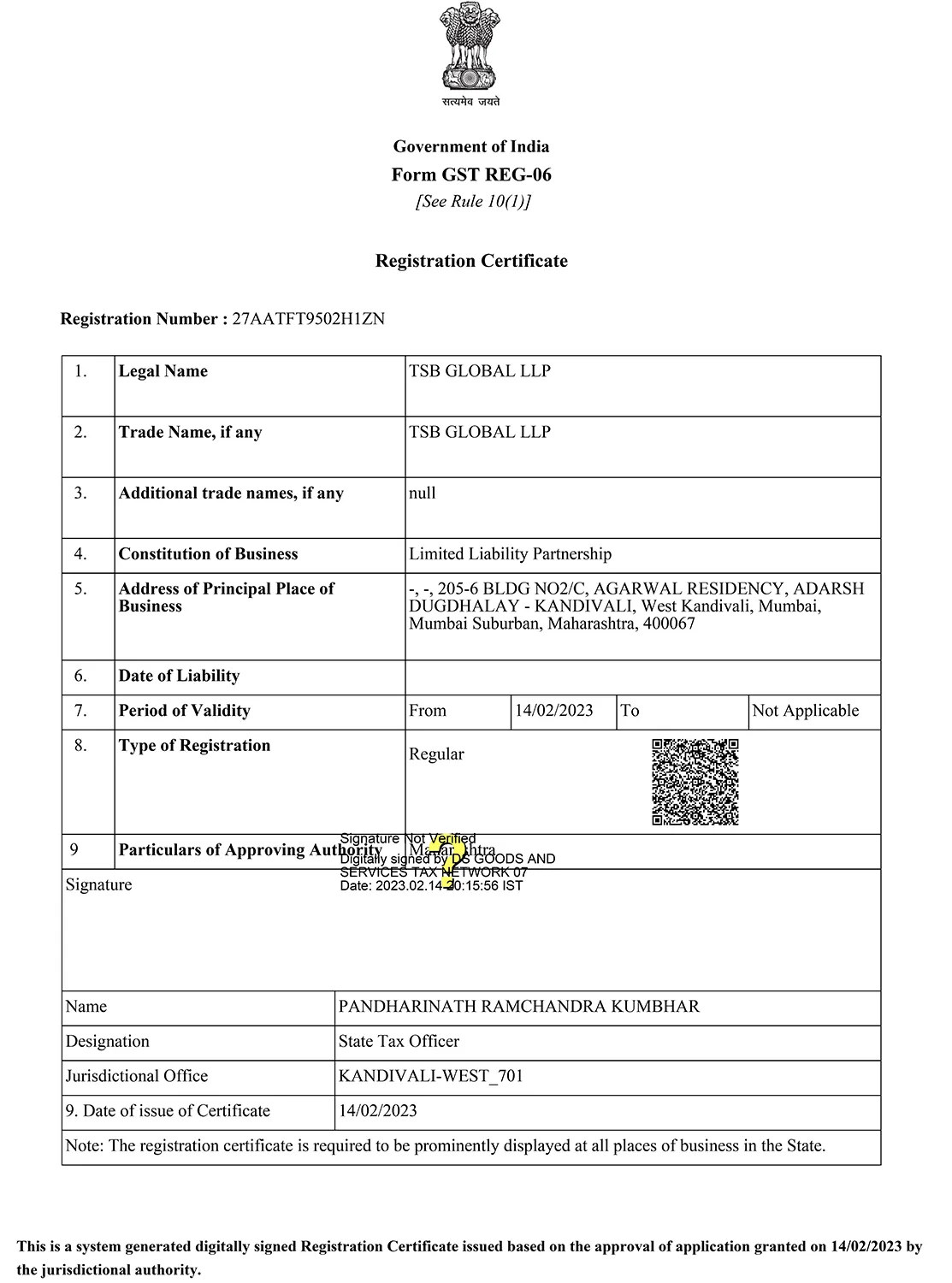
TSB Global LLP is a stockist and supplier rather than a drawing mill.
- Standard across-flats sizes held in depth for immediate release
- Both free-cutting and weldable grades are stocked, since neither substitutes for the other
- Fixed cut lengths with square, burr-free faces for bar feeding
- Consistent bundle length supporting automatic loading
- Supported racking preserving straightness and corner sharpness
- Mill test certificates supplied with every consignment
Rolled vs Cut Threading for MS Hex Bar Components
Most MS hex ends up threaded, and how that thread is produced changes both cost and performance.
Cut threading removes material to form the profile. The blank starts at major diameter and the thread is machined in. It works on any material and cuts through the grain at every root.
Rolled threading forms the profile by displacing material rather than removing it. The blank starts smaller than the finished major diameter, and rolling dies push material outward to form the crest. Nothing is cut away.
Rolling is both faster and better. There is no swarf, cycle time is a fraction of cutting, grain flow follows the thread contour, and the roots are left work hardened and in compression, which improves fatigue performance.
Two practical requirements follow. The blank diameter must sit between the pitch and major diameter, calculated for the thread form, since ordering at the major diameter and then rolling produces an oversize thread that will not gauge. And diameter consistency matters more than usual, because blank variation translates directly into thread major diameter variation across a narrow gauging window.
Testing and Certification
The standard release covers chemical analysis, tensile and yield strength, elongation and hardness. Where material goes into fastener production, proof load and wedge tensile testing on finished components can be arranged.
- Dimensional verification of across-flats, across-corners and included angle
- Twist and straightness measurement over defined lengths
- Carbon equivalent reported where the component will be welded
- Decarburisation depth to ISO 3887
- Third-party inspection through TUV, SGS, BV or a nominated agency
Certification is EN 10204 3.1 as standard, with 3.2 available on request.
MS Steel Hex Bars Exporters in India
As MS Steel Hex Bars exporters in India, we supply fastener plants, fitting manufacturers and machining units across the Middle East, Africa, Southeast Asia and Europe.
Two risks govern how this product is packed, and both are avoidable rather than inherent.
Corner damage comes first. The functional value of a hex bar sits entirely in its six corners, and a corner crushed beneath a strapping band cannot be recovered without taking the bar undersize. Strapping is therefore applied over protective packing rather than directly onto the bare section, and dunnage separates bundles.
Corrosion comes second, and MS is the worst of any material we ship for it. Bright drawn bar has no protective layer at all and will show visible rust within days in a humid container. Surface rust translates directly into accelerated tool wear on the first cut and inconsistent finish. Rust-preventive oil covers the full surface, VCI film wraps the bundle, and desiccant goes inside the container on tropical routes.
Why Choose TSB Global LLP for MS Steel Hex Bars?
Choose TSB Global LLP when consistency on the machine matters as much as the purchase price. We supply bright drawn MS steel hex bars in standard and precision sizes, sourced from leading Indian mills and selected for dependable dimensional accuracy, straightness and surface quality. Our stock covers both free-cutting and weldable grades, helping you select the right material for your machining or fabrication requirement. We support fixed cut lengths, careful bundle handling and protective export packing to minimise remnant loss, corner damage and corrosion. Every consignment can be supplied with EN 10204 3.1 certification, with dimensional inspection and third-party inspection available when required. Whether you need regular production supply or export quantities, TSB Global LLP focuses on reliable material, responsive service and predictable performance.
Need MS Steel Hex Bars That Perform Consistently on the Machine?
Tell us your size, grade, quantity and required length. Our team will recommend the right specification and provide a competitive quotation. Let us connect today.
About This Page
Cost proportions given here are indicative of typical turned-part economics and vary considerably with component complexity, batch size and machine type. Geometric relationships are exact for a regular hexagon; delivered sections vary within tolerance. Weight figures are theoretical at nominal density. Thread blank sizing must be calculated for the specific thread form and verified against your own gauging.