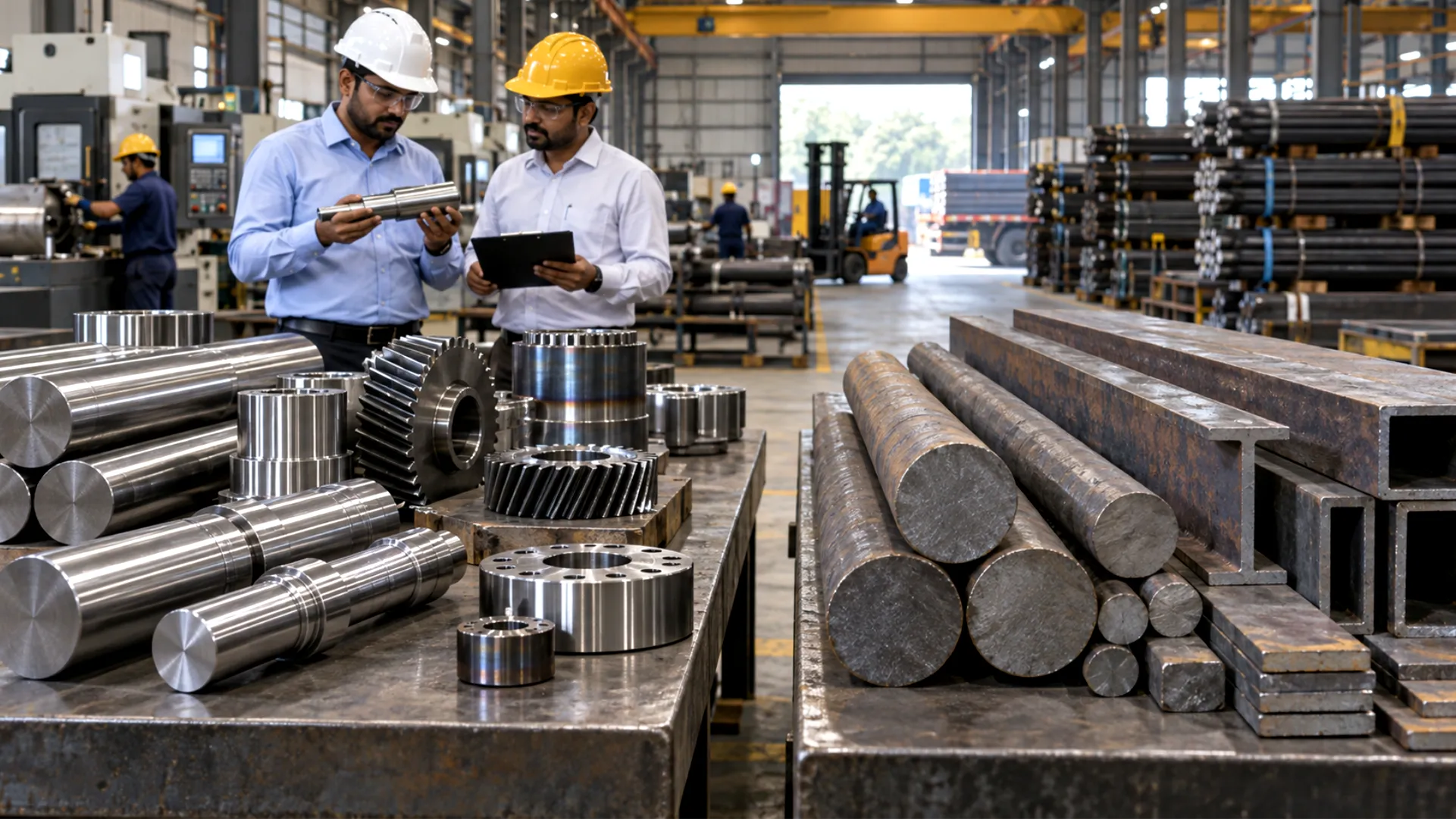
It is steel which determines what a machine will be before it ever gets to a factory floor. There is no checkbox to engineers and procurement teams in India when deciding on alloy and carbon steel: it is a choice that defines performance, safety, cost and long-term reliability throughout the lifecycle of a project. Do it right and your equipment will be running smoothly and last longer and require much less maintenance. Misjudge it, and even the well-thought-out design may collapse under the conditions of the real-world stress, vibration, or even corrosion. This manual simplifies the practical distinctions among alloy steel, carbon steel and their composition, strength, cost and application, such that you can confidently and well-informed make a material choice in your next engineering project.
The engineering and manufacturing industries in India are expanding at an unprecedented pace, and along with the growth come new demands of closer tolerances, increased safety standards and more demands of durability. Buyers do not have the option to use generic steel any more; they require the materials to be designed based on the specific loads, temperatures, and conditions.
Carbon steel is nothing more than a mixture of iron and carbon with just trace quantities of other elements. It is categorised as low, medium and high carbon steel depending on the amount of carbon it contains.
Alloy steel is the basic iron-carbon formula which is intentionally enriched with elements like chromium, nickel, molybdenum or vanadium. Every addition adds to the value of a particular property.
The mere addition of say 1 percent chromium to steel will significantly increase its wear and corrosion resistance and this is precisely the reason why chromium-alloyed steels are so popularly used in bearings, gears, and shafts that operate under continuous frictional and heat stress.
The essence of the difference is the role of alloying elements. Carbon steel is nearly 100% dependent on the proportion of carbon to dictate strength and hardness, whereas alloy steel incorporates several elements to adjust several properties simultaneously.
Alloy steel and carbon steel are produced in almost the same product shapes, but their final uses vary radically depending on the needs of their strength, exposure to temperature and environmental needs. Prior to approaching any stockist or supplier, it is beneficial to know what shape and grade combination is actually required in your project, as the wrong profile can cause unnecessary delays in machining schedules and unnecessary procurement costs.
|
Alloy Steel |
Carbon Steel |
|
Alloy Steel Round Bars |
Carbon Steel Round Bars |
|
Alloy Steel Flat Bars |
Carbon Steel Flat Bars |
|
Alloy Steel Square Bars |
Carbon Steel Square Bars |
|
Alloy Steel Hex Bars |
Carbon Steel Hex Bars |
|
Alloy Steel Plates |
Carbon Steel Plates |
|
Alloy Steel Coil |
Carbon Steel Coil |
|
Alloy Steel Shafts |
Carbon Steel Shafts |
|
Alloy Steel Blocks |
Carbon Steel Blocks |
Alloy steel can protrude in high-stress, high-temperature or corrosive conditions where its greater hardenability can enable manufacturers to take advantage of greater depth and uniformity of hardness in their heat treatment.
TSB Global LLP, being one of the reputable Alloy Steel Round Bars Stockist in India, provides the grades which are applicable to the automotive, construction equipment and industrial machinery manufacturers. Rotating and load-bearing parts are most important in terms of consistency, traceability and certification.
The hex-shaped bars are particularly useful in the production of fasteners and tools, in which flat gripping surfaces help to make machining, clamping, and assembly easier on the shop floor.
Carbon steel is also indefeasible to projects where cost matters and large volumes of it are required, such as structural fabrication, pipelines and general engineering that require the material to be used in large quantities due to its good weldability and rapid onsite fabrication.
“The Eiffel Tower and the original Titanic were both constructed mostly in carbon (wrought) steel and iron – a reminder that this lowly, low-cost material has helped create some of the most famous engineering projects of all time.”
The various industries depend on various steel families based on the load, exposure and budget.
It is good to know what the usual material mix of your industry is in order to reduce the time it takes to get specifications during procurement.
Price is a big determinant when it comes to Indian procurement teams that have a very limited project budget.
It is pointless to have material properties on paper without a dependable supply chain supporting them. In choosing a partner, do not just consider the price.
Count on the correct steel grade, shape and specification in making every engineering decision. Get high-quality, certified and dependable alloy and carbon steel products, products that maintain high quality and reliable supply, in partnership with TSB Global LLP according to your needs for the project.
We are always equipped with high grade alloy steels at all times. Call now to explore our catalogue.
We come back with the source named and the lead time split between stock and mill-rolled material — so your planning is based on a real date, not an optimistic one.